
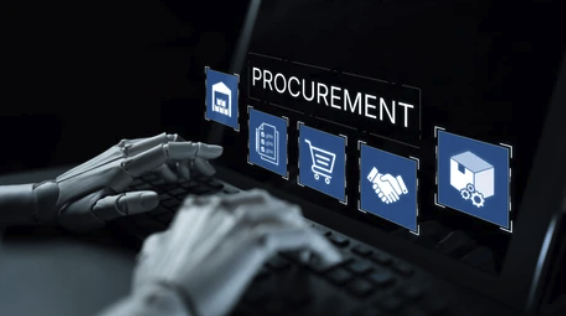
Last week, the Wall Street Journal reported that Jeff Bezos is in talks to raise $100 billion for a fund specifically designed to acquire manufacturing companies and accelerate their path to automation using AI.
Let that sink in for a moment.
One hundred billion dollars. Targeting manufacturers. Right now.
This is not a think piece about the future of AI. This is capital already in motion — and if you run a manufacturing operation, it is aimed directly at your industry.
The Man, The Fund, and What It Actually Means
The vehicle behind this is called Project Prometheus. Bezos co-founded it in late 2025 alongside Vik Bajaj, a former Google executive who previously co-founded Alphabet's life sciences division. The company launched with $6.2 billion in initial funding, recruited over 120 researchers from OpenAI, Google DeepMind, and Meta, and has been described in investor documents as a "manufacturing transformation vehicle."
The $100 billion fund would use Project Prometheus' AI technology to improve the efficiency and profitability of acquired businesses. Bezos has been traveling to the Middle East and Singapore to pitch sovereign wealth funds, and JPMorgan Chase is reportedly in preliminary discussions to back a related $10 billion resiliency-focused initiative.
To put the scale in context: the only private investment fund to ever raise anything close to this was SoftBank's Vision Fund. Bezos is building something that rivals the largest buyout operations in modern finance — and he is pointing it at industrial manufacturing.
The target sectors? Aerospace. Defense. Chipmaking. General manufacturing.
What Project Prometheus is actually building is not about putting assembly robots on factory floors. According to reporting from Axios, it is focused on optimizing pre-production processes — prototyping, materials, engineering workflows — the inputs and systems that happen before anything gets built. AI models that understand and simulate the physical world, applied to the operational layer of manufacturing businesses.
The strategy is as straightforward as it is aggressive: buy legacy manufacturers, embed proprietary AI into their operations, and capture the upside from both efficiency gains and strategic value creation.
This Is Not a One-Man Show
Bezos is not alone in this thesis. He is the biggest name, but the broader movement is already well underway.
Travis Kalanick has been building Atoms around a similar manufacturing automation vision. Elon Musk continues to pitch Tesla's robotics capabilities to investors. Private equity firms across the board are increasingly evaluating manufacturing targets through an AI lens — asking not just what a company earns today, but whether its operations are structured to absorb automation and multiply those earnings tomorrow.
The difference with Bezos is the scale of capital and the deliberateness of the approach. This is not a side project. He stepped back from Amazon five years ago. Project Prometheus is where he has chosen to put his operational energy and his money. That tells you everything about where the smart money believes the next decade of industrial value creation is headed.
The Uncomfortable Truth Most Manufacturers Are Ignoring
Here is where things get real for the mid-market manufacturer reading this.
You may not be in aerospace or defense. You may not be a target for a $100 billion fund. But you are operating in an industry that is about to experience a significant compression event — where AI-enabled competitors gain structural cost and speed advantages that are very difficult to close once they open up.
The data on this is stark.
According to a TCS and AWS study on manufacturing AI readiness, only 21% of manufacturers say they are fully AI-ready — despite 94% reporting some form of AI use. That gap between using AI and being structured to benefit from it is where most companies are quietly stuck.
BCG's 2026 supply chain planning report found that while most manufacturers have invested in advanced planning systems, few translate those investments into consistent performance gains. The differentiator is not the technology. It is whether the underlying data, processes, and supplier infrastructure can support it.
Supply Chain Management Review put it most directly: the limiting factor in AI adoption is rarely model performance. It is data readiness. Fragmented supplier records. Inconsistent PO pricing. ERP systems built on years of acquisition without integration. Institutional knowledge living in spreadsheets and people's heads.
Grant Thornton's research on AI in manufacturing found that manufacturers frequently acquired equipment, technologies, and whole companies without a plan for connecting the data. Now those disconnects are dragging down the speed and value AI can deliver.
And according to Gartner, through 2026, 60% of AI projects will be abandoned because they are not supported by AI-ready data.
Let that be the benchmark. Not whether you have an AI strategy. Whether your data foundation can actually support one.
What Happens When AI Hits a Messy Supply Chain
The instinct many manufacturers have right now is to get ahead of this by moving fast on AI. Buy a platform. Launch a pilot. Show the board you are doing something.
That instinct is understandable. It is also backwards.
When you layer AI onto a fragmented procurement system — one with 40% more suppliers than you need, inconsistent pricing across locations, PO history that does not reconcile cleanly, and ERP records that nobody fully trusts — you do not get efficiency. You get faster chaos. You get a system that makes the wrong decisions with greater confidence and at greater speed.
The manufacturers who benefit from this wave are not the ones who move fastest to deploy AI. They are the ones who do the foundational work first.
That means five things:
1. Consolidating the supplier base.
Most mid-market manufacturers carry far more supplier relationships than their spend justifies. That fragmentation creates pricing inconsistency, compliance risk, and a supplier network no AI sourcing tool can operate reliably within. Getting to a leaner, higher-performing supplier base is table stakes for any automation initiative.
2. Surfacing and eliminating cost leakage.
Off-contract spend, pricing variances across facilities, stale vendor agreements that have not been renegotiated in years — these are invisible in a manual procurement process and catastrophically amplified by AI. Every dollar of leakage that exists in your system today will be locked in faster once automation takes over.
3. Cleaning the data.
ERP records, PO history, pricing data, supplier master files — if you cannot answer basic questions about your own spend with confidence, an AI system cannot either. The foundation has to be built before the technology gets layered on top.
4. Mapping what is actually ready to automate.
Not every procurement function benefits from automation at the same stage. Sourcing, quoting, and forecasting are all candidates — but only after the processes are documented and the data is reliable. Automating a broken process just breaks it faster.
5. Stabilizing sourcing before scaling it.
Volatile material costs and extended lead times are not technology problems. They are supplier strategy and contract discipline problems. Solving them requires procurement expertise, not procurement software.
What This Means If You Are Thinking About Selling
If there is any chance you will be taking outside capital, selling, or entering a PE-backed transaction in the next three to five years, the Bezos news should reframe how you think about your supply chain today.
PE buyers are increasingly sophisticated about operational readiness for AI. The question is no longer just what are your margins. It is whether your operations are structured to improve those margins through automation. Clean data, consolidated suppliers, documented processes, and procurement systems that can absorb technology are direct value drivers — not just operational hygiene.
The inverse is equally true. A supply chain that is fragmented, data-poor, and running on institutional knowledge represents operational risk in any transaction. It is a haircut on your valuation, a due diligence red flag, and a post-close problem for whoever buys you.
The companies that command premium valuations in this environment are the ones that have done the work. Not the ones with the fanciest AI tools — the ones with the cleanest foundation.
Where Maverick Comes In
We have spent 20+ years doing the hard, unglamorous work of manufacturing procurement transformation. Supplier consolidations. Cost leakage audits. ERP data cleanup. Process documentation. Sourcing stabilization in volatile material environments.
None of that work is glamorous. All of it is valuable. And in the current environment, it is the exact work that determines whether AI creates value or creates chaos in a manufacturing operation.
Our AI-Ready Procurement service is built specifically for manufacturers who want to get ahead of this wave — whether you are preparing for a PE transaction, operating under a new ownership mandate to modernize, or simply trying to ensure that the automation tools your competitors are deploying do not leave you behind.
We audit your supplier base, your procurement data, and your operational processes. We surface the leakage, identify the consolidation opportunities, clean the foundation, and hand you a prioritized roadmap for what needs to happen before AI touches any of it.
No platform pitch. No vendor agenda. Just an honest assessment of where you stand and a clear path to where you need to be.
Whether Jeff Bezos acquires a company in your sector or not, manufacturing is being reshaped by AI-backed capital right now. The question is not whether to get ready. It is whether you get ready on your timeline — or someone else's.
Sources
Sources: Wall Street Journal, TechCrunch, Axios, Bloomberg, McKinsey & Company, BCG Supply Chain Planning 2026, Supply Chain Management Review, Grant Thornton, TCS/AWS Future-Ready Manufacturing Study, Gartner.